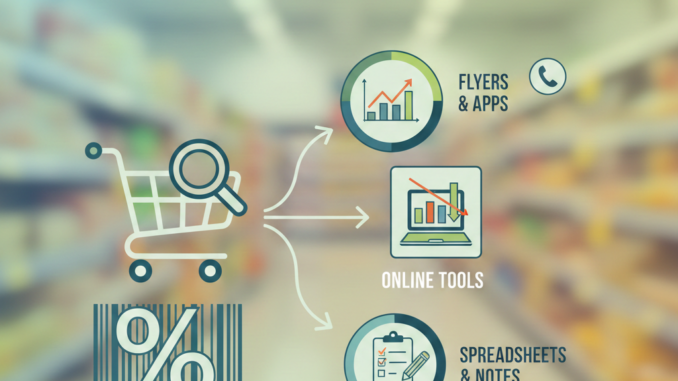
If you notice, grocery prices rarely stay the same. You can see a carton of eggs that costs less this week might be significantly higher next week. Statistics show that grocery prices have risen by 3.8% since April of 2025, which has outpaced inflation and is not likely to stop soon.
If you are shopping and trying to save money on groceries, these small changes add up fast. That is why grocery price comparison is necessary when tracking prices; it is a wise tactic.
Tracking grocery prices does not require complex tools, spreadsheets, or hours of research. With the right approach, price comparison becomes a quick and consistent weekly routine that helps households save money.
This guide explains how to track grocery prices easily, compare stores efficiently, and avoid common mistakes that cost shoppers money.
Why Grocery Price Comparison Matters More Than Ever
Food prices differ more often than most people realize. Promotions, supply changes, and regional pricing all affect what appears on a receipt.
Without tracking prices:
- Overpaying becomes routine
- Discounts are harder to recognize
- Store loyalty replaces logic
Grocery price comparison enables anyone shopping to identify price patterns instead of relying on what they think. When price history is visible, smarter decisions follow naturally.
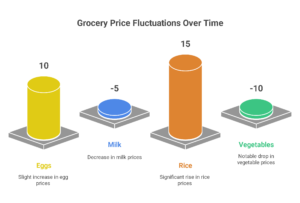
Understanding Grocery Price Comparison (Simple Explanation)
Grocery price comparison is the process of checking the cost of the same item across different stores or over different weeks. The goal is not to chase every deal but to understand what a good price actually looks like.
There are two main ways prices are compared:
- Store-to-store comparison – comparing prices between supermarkets
- Time-based comparison – tracking how prices change week to week
When combined, these methods reveal which store is cheapest and when to buy.
The Easiest Ways to Track Grocery Prices
Tracking prices works best when it fits easily into normal shopping habits. Below are the most practical methods, ranked from simplest to more advanced.
1. Using Grocery Price Comparison Apps
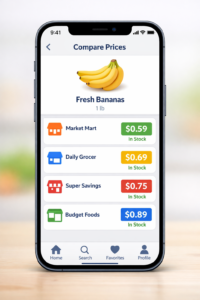
Apps like Flipp and Frugl are the fastest way to compare prices with minimal effort. Many instantly just show price differences across stores.
Common features include:
- Barcode scanning
- Price history tracking
- Store comparisons
- Sale alerts
Popular grocery price tracking apps often work best in urban areas. Others, like Price Book, help you track and build your own price history.
2. Store Websites and Weekly Flyers
Many supermarkets publish weekly flyers online. Comparing these flyers side by side reveals price differences instantly.
This method works best for:
- Staples like rice, oil, milk, and eggs
- Weekly meal planning
- Bulk purchases
A simple habit of checking flyers before shopping prevents impulse spending.
3. Manual Tracking Using a Simple Spreadsheet
For shoppers who want full control, manual tracking is still one of the most accuratez reliable options.
A basic spreadsheet includes:
- Item name
- Store name
- Price
- Unit size
- Date checked
No advanced formulas are required. Over time, patterns become obvious.
4. Notes App or Paper List (Low-Tech Option)
Not everyone wants apps or spreadsheets. Writing prices down after shopping still works. Tools like Basket and Save On Groceries combine price comparison with lists and alerts to make grocery shopping more efficient.
This method is ideal for:
- Small households
- Single shoppers
- Weekly routine buyers
Consistency matters more than format.
How to Compare Grocery Prices the Right Way
Price comparison is not just about choosing the lowest price. Without context, low prices can be misleading.
Always Compare Price Per Unit
Larger packages often look cheaper but may cost more per unit.
For example:
- $5 for 500g = $0.01 per gram
- $8 for 1kg = $0.008 per gram
The second option is cheaper even though the shelf price is higher.
Compare the Same Brands and Quality
Generic vs premium brands vary in quality. Price comparison only works when items are comparable.
Avoid comparing:
- Organic vs non-organic
- Brand-name vs store-brand (unless quality is equal)
Fair comparisons lead to accurate savings.
Track Prices Over Time, Not Once
One-week discounts can distort perception. True savings appear after tracking prices for several weeks.
Patterns often emerge, such as:
- Monthly sales cycles
- Seasonal price drops
- Consistently overpriced stores
Best Grocery Items to Track First
Not all items are worth tracking. Focus on groceries that affect the budget most.
High-impact items include:
- Rice, pasta, flour
- Cooking oil
- Eggs and dairy
- Meat and frozen foods
- Cleaning supplies
These items have predictable price fluctuations and offer the biggest savings.
Store-to-Store Comparison Strategy That Works
A common mistake is shopping at too many stores. Time is also a cost.
A smarter approach:
- Identify one primary store for most shopping
- Choose one secondary store to select cheaper items
- Track only overlapping products
This reduces effort while maintaining savings.
[IMAGE SUGGESTION: Two-store comparison checklist graphic]
Mistakes to Avoid When Tracking Grocery Prices
Even good systems fail when common mistakes are made.
Ignoring Unit Sizes
Prices must be normalized to avoid false savings.
Chasing Discounts Without a Plan
Sales encourage unnecessary purchases.
Tracking Too Many Items
Start small and expand gradually.
Forgetting Location-Based Price Differences
Prices vary by region and store branch.
How Often Grocery Prices Should Be Tracked
Weekly tracking works best for most households. Monthly tracking works for bulk buyers.
Recommended schedule:
- Weekly: perishables and fresh items
- Monthly: pantry staples and household items
Consistency is more important than frequency.
Making Grocery Price Tracking a Habit
Price tracking should feel automatic, not exhausting.
Helpful habit tips:
- Track prices right after shopping
- Keep tools easily accessible
- Review prices before each grocery trip
The system improves with repetition.
How Grocery Price Comparison Saves Money Long-Term
Small weekly savings create large annual results.
Even saving:
- $5 per week = $260 per year
- $10 per week = $520 per year
Price tracking also reduces impulse buying and food waste.
Advanced Tips for Smarter Grocery Price Comparison
Once the basics are mastered, small upgrades improve results.
- Combine price tracking with meal planning
- Track store brand vs name brand prices separately
- Monitor price cycles for bulk purchases
These refinements turn grocery shopping into a predictable system.
Final Thoughts: Simple Tracking, Real Savings
Grocery price comparison does not require you to be perfect. It requires a sense of awareness. Tracking prices even in the simplest way creates clarity that leads to smarter decisions.
When grocery prices are understood, shopping becomes intentional instead of reactive. Over time, the habit pays for itself.
FAQs
How can grocery prices be compared easily?
Grocery prices can be compared easily by using price comparison apps, checking store websites or weekly flyers, or tracking prices manually in a simple spreadsheet or notes app.
Is there an app that compares grocery prices?
Yes. Apps like Flipp, Basket, Price Book, and Trolley allow shoppers to compare grocery prices across stores and track price changes over time.
What is the best way to track grocery prices?
The best way to track grocery prices is to record prices weekly for common items, compare prices per unit, and review trends instead of relying on one-time discounts.
Why do grocery prices vary between stores?
Grocery prices vary due to store location, supplier contracts, promotions, operating costs, and regional demand.
How often should grocery prices be checked?
Grocery prices should be checked weekly for fresh items and monthly for pantry staples to identify patterns and real savings.
Be the first to comment