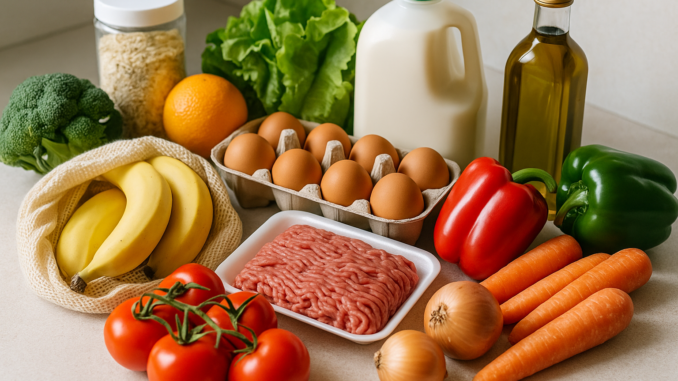
Budgeting your money when shopping really helps a lot, from budgeting your money to making sure everything is spent well and kept intact. Statistics show that SNAP benefits have returned to their regular levels, things feel a little more stable, but grocery prices are still higher than usual.
You might have had some shopping mistakes over the years. So why not share some strategies that will help you save money when shopping? Some are experiences I’ve learned, and others are observations from others.
In this guide, we will discuss 15 proven, practical tips for saving money on groceries that anyone can use. These are simple changes that lighten your monthly budget and help you shop with intention. Ready?
Let’s dive in!
How do I save money on groceries?
It all comes down to building a few simple habits that stop unnecessary spending.
A significant step can be cooking at home more often, planning meals around what you already have, and stretching ingredients to help your budget stretch further than you expected. And once these habits stick, grocery shopping becomes much easier.
Quick meal planning ideas that help:
- Always bring a list (and stick to it)
- Check your pantry before shopping
- Buy only the foods you actually eat
- Treat sales as bonuses, not reasons to buy
- Plan meals around what you already have
- Cook simple meals at home more often
The 15 tips on how to save Money on Groceries
1. Create a Weekly/Monthly Meal Plan
The first step is to create a meal prep plan. Whether it is a weekly plan or a Monthly plan, make sure to create it first. This is what I use to get by the month without burning too much cash. Does it hurt? Yes, this level of discipline is necessary if you want to save up.
You should try not to plan several complicated meals. Try to stick to simple meals that help give protein and boost your productivity. Just nothing too fancy.
Try that every end of the week, you do a quick inventory. Something I do and ask myself is “What is getting old? How can i use it before it gets bad or is unfit for consumption?” This right here can help you avoid food waste.
Meal planning can make you realize that you are not bad with money… You are just unprepared. And grocery shopping done well is done by people who create a meal plan.
2. Shop With a Grocery List (A grocery list tip to stick to!)
After your plan is done, you need a grocery list to use when you actually go grocery shopping. There are times i go to the shopping mall and think that my good old brain is enough for me to do my shopping. Well, sometimes it works, and most of the time it backfires really quickly. A grocery list may sound simple, but it can change your whole budget.
The truth is, stores are designed to distract you. When you go in without a list, you usually lose track of what you are to buy. But with a list? You follow it keenly till you buy everything in it.
The most challenging part is sticking to the grocery list. If it’s not on the list, ask yourself why you suddenly need it.
3. Compare Prices Across Stores
This sounds like a hassle, but it really does help. Sometimes I used to shop at the same store out of habit. But one day, out of curiosity, I compared the prices of my items on my shopping list across three stores: Aldi, Walmart, and the regular supermarket. I realised that i was actually wasting money. Like genuinely wasting money. The difference? Almost $30 across the same list of items.
That was my wake-up call. Every store has its own strengths. Aldi is unbeatable for produce and staples. Walmart wins for household stuff and pantry goods. Costco shines for bulk protein and snacks. It is just to know where each store excels and plan your trip around that. But don’t go crazy, driving across town to save 30 cents on pasta isn’t worth the gas.
Key takeaways:
- Try to keep a little “price book” in your phone. just items you usually buy often and their usual prices at different stores.
- Not every sale is a real sale. Sometimes stores hike prices the week before just to put them “on sale” the following week. That’s why knowing the usual price saves you from falling for fake deals.
- Price comparisons are crucial for saving money on groceries. Try to be intentional. Maybe you shop at two stores, your main one and a secondary store for the cheapest staples if available.
4. Use Cashback and Grocery Apps
Apps like Fetch, Upside, and even store apps give rewards for snapping receipts or buying certain brands. It feels small, but trust me, the small stuff multiplies. One time, I stacked a store coupon, a manufacturer’s coupon, and a cashback offer on cereal, and walked out having paid 34 cents. It was not a good experience at all.
Note: these apps can tempt you into buying things you don’t need just because there’s an offer. I’ve fallen for that trap too many times. If an app gives you money back on frozen pizza, that’s great if frozen pizza was already on your list. If not? Skip it. Remember: a deal isn’t a deal if it makes you spend more.
Also, loyalty apps from stores like Kroger or Target give instant discounts. Just last month, I saved $17 in one trip with digital coupons alone. No scissors. No binder. Just tapping “clip.” It feels too easy.
The secret is stacking:
- Use a store loyalty discount
- Add a manufacturer’s coupon
- Apply cashback from an app
This is how you get the legendary receipt that feels like a victory parade.
If you’re not using apps yet, start with Fetch and Ibotta. They’re simple, fast, and actually worth your time. And hey, free money is free money.
5. Buy Generic Instead of Name Brand
I used to go for name-brand items. My pantry looked like a commercial. If it weren’t name-brand, I wouldn’t touch it. Then one day, out of desperation (and a tight budget), I bought generic peanut butter. I was bracing myself for disappointment… but guess what? It tasted the same. Maybe better.
That one moment changed everything.
Here’s the thing most people don’t know: many generic products are made in the same factories as the name-brand ones. Same ingredients. Same quality. Just cheaper packaging. Most were identical, sometimes word-for-word.
Over time, I discovered what I call my “generic heroes”:
- Oatmeal
- Canned tomatoes
- Beans
- Rice
- Flour
- Butter
- Spices
- Pasta
- Cleaning supplies
These items taste or work just as well, at a fraction of the price. I save at least 20–30% on groceries by swapping just these basics.
Now, there are a few name-brand items I stick with (mayonnaise, for example, generic just doesn’t do it for me). But those are exceptions, not the rule.
My takeaway: Do a blind taste test. Seriously. Try one or two generic swaps each week and see what you think. Nine times out of ten, you’ll be pleasantly surprised. And even if you don’t love one, you’re only out a couple of bucks.
6. Shop Seasonal Produce
A few years back, I followed a seasonal produce chart for the first time. My grocery bill dropped without me doing anything drastic. When certain fruits or vegetables are in season, they can be very cheap at times and can help you save more.
Plus, seasonal shopping can help you switch up meals without getting too bored. In spring, I personally eat a lot of vegetables. Summer is tomatoes and peaches. Fall is squash-land. Winter? Bring on the oranges and potatoes.
Shopping seasonally makes you feel like you’ve unlocked a cheat code for healthy eating. And honestly, the food tastes better, too.
7. Buy in Bulk (Strategically)
Buying in bulk may seem cheaper, but it is not always the case. It is good when bought with some wisdom.
Bulk buying is wise only when you’re buying the right things. Here is a bulk buying tip I now stick to:
- Toilet paper
- Rice and pasta
- Beans
- Chicken breast
- Cheese
- Snacks for kids
- Cleaning supplies
These items last long and are actually used. But if it is a perishable good, I advise we take care.
Costco is great, but you can still overspend if you’re not paying attention. I always compare unit prices to avoid the image of savings. And I never buy something in bulk unless I already buy the smaller version regularly.
Done right, bulk buying can easily save $20–$40 per month. Done wrong? It’s just expensive, wasted items.
8. Avoid Pre-Cut or Pre-Packaged Foods
This one a lot of people don’t like, including me, because I love convenience. But pre-cut products are money grabbers. One day, I compared prices: a whole pineapple was $2.49, while the pre-cut container was $6.49. Same fruit. Same flavor. Three times the price. CRAZY!
Yes, pre-cut is easier. But if you’re trying to save, doing your own chopping is worth it. The time investment is small compared to the savings.
I started doing a “prep hour” every Sunday. I wash and chop produce, portion snacks, and store everything in clear containers. Not only do I save money, but I also eat healthier because the food is ready to go. You can try it too.
The good thing is my fridge looks like it belongs in a magazine. Well… on a good week that is.
9. Learn to Read Price Per Unit
Many of us do not have the patience for this, even me at times. Unit pricing is a hidden ticket to grocery shopping. Once you learn to read it, everything changes. The unit price tells you how much you’re actually paying per ounce, pound, or piece. It exposes fake deals instantly.
Stores hide unit labels sometimes or make them tiny on purpose. But once you find them and compare, you start discovering deals everywhere.
This tip is simple, but incredibly powerful. It’s saved me hundreds over time.
10. Reduce Food Waste at Home
I used to waste so much food that I could’ve helped someone in need. Stuff usually gets shoved to the back of my fridge until it becomes unrecognizable. It wasn’t that I didn’t care; I was just unorganized.
My two best changes:
- The “Eat Me First” bin – anything close to expiration goes here.
- Prepping perishables right away – things rot more slowly once washed and stored correctly.
Understanding expiration dates helps, too. “Best by” doesn’t mean “bad after.” It’s more like “tastes best before.”
Freezing is my secret weapon now (I believe most of us know this). Freeze Leftover rice, bread, and chopped veggies before they go bad.
11. Use Store Loyalty Programs
Some people think loyalty programs track you. Maybe they do. But honestly? If saving $10–$20 per trip is the price, go ahead and track me.
I’ve saved hundreds from digital coupons alone. No kidding.
Target Circle, Kroger Plus, Safeway Just for U… they all offer extra discounts that regular shoppers never see.
My takeaway: Stack loyalty deals with cashback apps. It’s legal. It’s easy. It’s glorious.
12. Cook More at Home
This one is obvious, but matters a lot. One time, I added up how much I spent on takeout for a month and nearly fainted. Cooking at home saves you money, gives you leftovers, healthier meals, and more control.
Batch cooking is my go-to. Make a huge pot of chili or pasta sauce, freeze half, and boom, you have meals for the week. It is shown that this is a modern and one of the most used forms of saving money on groceries
13. Shop the Sales (But Don’t Get Tricked)
Some sales are real. Some are scams. One trick you can know is if a store labels something “Buy 5, Save $5,” you don’t always need to buy all five. Read the fine print.
Sales follow cycles, too. Pasta goes on sale every 6–8 weeks. Cereal cycles every month. When you know the pattern, you stock up at the right time rather than paying full price.
14. Buy Frozen Instead of Fresh When It Makes Sense
It’s cheap, lasts forever, and tastes the same in most recipes. Frozen ramen, broccoli, peas, and berries they’re budget gold.
Fresh fruit goes bad fast, but frozen food waits patiently. It’s the most loyal food in your kitchen.
15. Don’t Shop Hungry
It speaks for itself. I once shopped hungry and walked out with $68 worth of snacks. Not groceries, snacks. Never again. Eat before you shop. Trust me. Hunger is a reckless spender.
Conclusion
Once you get the hang of meal planning, comparing prices, using cashback apps, and reducing waste, you’ll start seeing extra cash in your bank account every single month, sometimes faster than you expect.
Try a few of these tips this week and see what happens. You might surprise yourself! And if you have your own grocery-saving tricks, don’t hesitate to share them. Everyone loves learning a good money hack.
FAQs
1. What is the easiest way to save money on groceries?
Use a grocery list and stick to it. It curbs impulse buying and keeps your spending under control.
2. How can I lower my grocery bill without coupons?
Meal plan, buy generic, choose seasonal produce, and reduce food waste. These save more than coupons.
3. Is frozen produce cheaper than fresh?
Yes. Frozen produce is often cheaper, lasts longer, and retains the same nutritional value as fresh produce.
4. How can a large family save money on groceries?
Buy in bulk, cook large meals, avoid individually packaged items, and shop at discount stores.
5. How do I stop impulse buying at the store?
Eat before shopping, follow your list, and avoid aisles you don’t need to enter.
Be the first to comment